A 1976 Canon set out to make automatic photography feel ordinary, dependable and within reach.

Canon AE-1: when the camera learned to think

When the AE-1 arrived in April 1976, automatic exposure was still associated with costly, relatively rare SLRs. Canon’s New Model X team brought together engineers from electronics, mechanics, optics and manufacturing to make a different kind of camera: one designed as a coordinated whole. Canon says its microcomputer-led redesign cut 300 parts from the construction and made automated production possible at a more accessible price.

The idea was not to take the picture away from the photographer. The AE-1 could choose a shutter speed, but the person behind the finder still chose the lens, focused, framed and decided when the moment felt right. Its launch helped make an electronically assisted SLR a familiar tool for everyday photographers, not just a specialist purchase.

The scale of that change is visible in the camera’s afterlife. Canon’s museum collection includes an AE-1 bearing serial number 1,000,000, while Canon’s own history recalls record sales after the US launch. Add the Power Winder A and the growing FD lens family, and the AE-1 becomes a snapshot of a larger shift: photography was opening up to more people, while still rewarding curiosity and practice.


Wikimedia Commons file and licensePhoto credit and license appear here when a matching image is available.

A camera that helped build a system

The AE-1’s place in Canon’s line was a generational shift toward electronics and accessibility. Canon used a microcomputer to coordinate shutter-priority exposure and several camera operations, reducing the number of precision mechanical parts required and helping the company make a sophisticated SLR at a more attainable price. Compared with the earlier FTb generation, the AE-1 asked the photographer to set a shutter speed while the body selected the aperture; the built-in meter and viewfinder display made the result easy to follow. The trade-off was dependence on battery power for normal operation, a reminder that convenience and electronics had become central to the camera. The AE-1 was part of Canon’s broader FD-era push to make the camera system work together. A Power Winder A could take over film advance, dedicated Speedlites coordinated with the body, and FD lenses covered everything from ordinary family pictures to portraits and distant subjects. For many owners, the camera body was a beginning: the pleasure came from discovering what a new lens or a different roll of film could do.

Canon developed the camera in Japan and marketed it internationally. Its success helped make Canon’s name recognizable far beyond the professional press and studio world.

Introduced 1976Format 35mm 135; 24×36mmFocus Manual focusMount Canon FD mount; standard lenses: FD 50mm f/1.4 SSC or FD 50mm f/1.8 SC

Technical specifications

Camera type35mm SLR camera
Release date1976-04
Dimensions141x87x48
Weight590 g
Fixed lens / MountCanon FD mount; standard lenses: FD 50mm f/1.4 SSC or FD 50mm f/1.8 SC
Film format35mm 135; 24×36mm
Sensor× · film camera
ISOISO 25–3200
ShutterElectronic horizontal-travel cloth focal-plane; B–1/1000s (discrete)
Exposure systemTTL center-weighted metering; shutter-priority AE or stopped-down manual match-needle; ISO 25–3200
FocusingManual focus; central split-image rangefinder with surrounding microprism
ViewfinderFixed eye-level pentaprism; 0.86×; 93.5% vertical / 96% horizontal coverage; meter needle, aperture scale and warnings
FlashNo built-in flash; hot shoe with Canon flash-control contacts and JIS-B PC sync terminal; X sync 1/60 s (M sync 1/30 s or slower).
Battery1 × 6 V 4G-13 mercury-oxide or 4LR44 alkaline

Why photographers value it

  • An approachable first SLR for photographers moving up from a compact camera.
  • Its controls made learning exposure feel like a progression, not an entrance exam.
  • A huge FD lens and accessory family let a modest first kit grow over time.
  • A million-numbered example in a museum collection hints at the scale of its success.
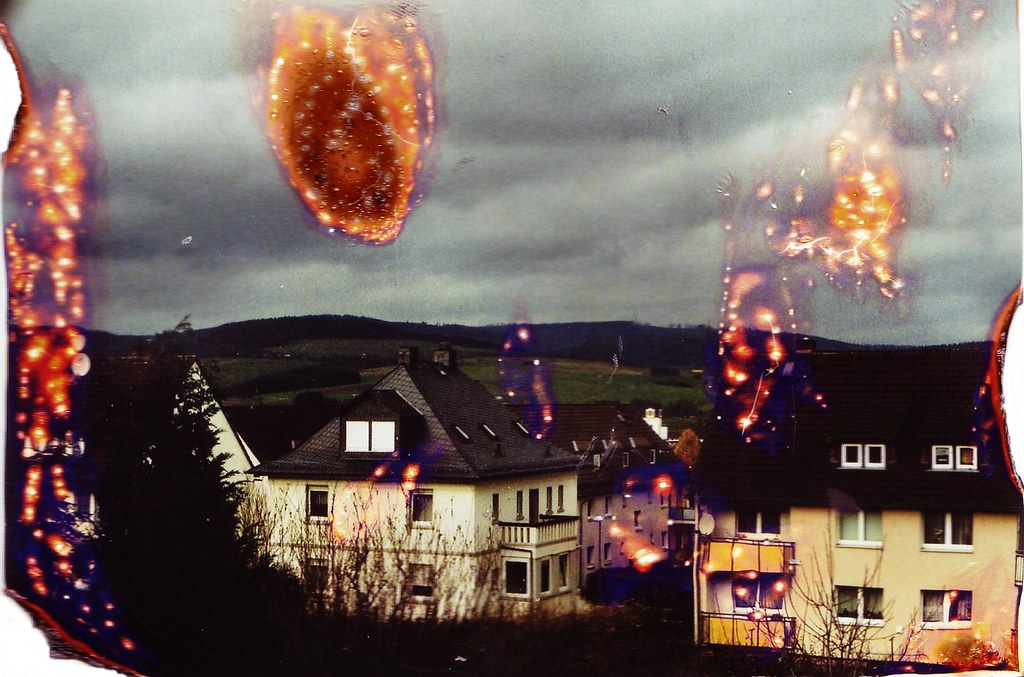
Fire comets above my hometown, photograph made with a Canon AE-1

Photographs made with the Canon AE-1

Browse the Canon AE-1 group on Flickr ↗Preview: “Fire comets above my hometown” by isa•bell, licensed under CC BY-ND 2.0.

Where it sits in the camera line

Related models

PredecessorFTb-NEarlier model in the related system or product line.
Featured · 1976Canon AE-1Canon’s AE-1 made electronic exposure control far more accessible. Canon’s museum dates it to April 1976 and describes a centrally controlled microcomputer architecture: five major and 25 minor units coordinated by a microcomputer.
SuccessorAE-1 ProgramLater camera in the same or related product family.
Model histories, production figures and accessory compatibility are included only where the linked sources support them. Exact totals and regional naming can differ across sources.
Compare this camera

Sources and image credits

Read the original references